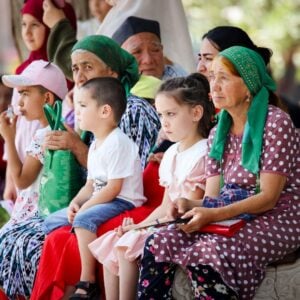
In Cambodia, women migrant workers returning from abroad are emerging as role models and community leaders, sharing their experiences to raise awareness about safe and legal pathways for overseas employment. These women, many of whom endured dangerous journeys, unsafe border crossings, and exploitation, are now transforming into advocates who help others navigate labor migration safely.
The PROTECT project, focused on ensuring decent work and reducing vulnerabilities for women and children in South-East Asia, has supported the Cambodian Women’s Crisis Centre in establishing eight Community-Based Protection Network (CBPN) groups in the Pouk and Krolanh districts of Siem Reap, engaging around 160 women members. These networks provide training on safe migration, labor rights, gender equality, financial literacy, and skills to identify and report cases of trafficking and violence against women, along with counseling and advocacy.
Through these networks, members have successfully referred critical cases, including survivors of gender-based violence, to essential services such as psychological counseling, legal support, and safe shelters. Women like 36-year-old Yeng Mab from Krolanh district are applying these skills by training other network representatives, guiding them on how to document and report violence and trafficking, and mentoring them to lead and advocate within their communities.
Sophia Kagan, Chief Technical Advisor of the PROTECT project, highlighted the initiative’s impact, noting that returnee women bring invaluable lived experiences that help others migrate safely and protect their communities from exploitation. The program also engages local authorities and police, providing training on human trafficking, violence against women, and victim identification procedures.
Xiaoyan Qian, ILO Director for Thailand, Cambodia, and the Lao People’s Democratic Republic, praised the Cambodian Women’s Crisis Centre for its dedication to community-centered support, emphasizing that empowering women with knowledge and collective action can transform communities and protect those most at risk.