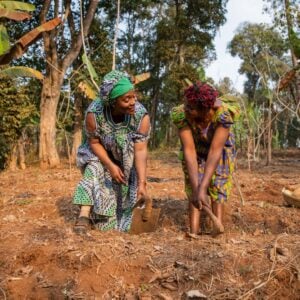
In Kasama District, northern Zambia, Maureen Bwalya has transformed her two-hectare cassava farm into a model of climate-smart agriculture, turning a traditionally low-yield crop into a source of increased income and resilience for her family. Through the European Union-funded Sustainable Intensification of Farming Systems in Zambia (SIFAZ) Project, led by the Food and Agriculture Organization of the United Nations (FAO) in partnership with the International Maize and Wheat Improvement Center (CIMMYT) and the Ministry of Agriculture, Maureen and other farmers have adopted innovative techniques to enhance productivity and combat climate-related challenges.
Cassava, one of Zambia’s most climate-resilient crops, thrives even under erratic rainfall. SIFAZ trains farmers in flatland intercropping, combining cassava with groundnuts and beans to boost yields, improve soil fertility, and reduce vulnerability to climate shocks. By switching from ridge planting to flatland intercropping, Maureen has more than doubled her harvests, significantly increasing household income and food security.
The project also emphasizes value addition, teaching farmers to process cassava into cakes, fritters, beverages, and other products that extend shelf life and increase market value. Maureen’s small processing venture has become a dependable source of income, enabling her to purchase a motorcycle for product delivery and inspiring other farmers in her community to adopt climate-smart practices.
SIFAZ operates across 27 districts in Zambia, promoting Sustainable Intensification Practices that increase productivity while conserving natural resources. Lead farmers share knowledge with hundreds of “follower farmers,” multiplying the impact at the community level and strengthening local food systems.
Aligned with Zambia’s Vision 2030 and National Agricultural Policy, the initiative supports climate-resilient and nutrition-sensitive agriculture while empowering women to take leadership roles in farming. For farmers like Maureen, SIFAZ has not only improved yields and income but also fostered pride and confidence, demonstrating that sustainable agriculture can drive rural prosperity and community transformation.