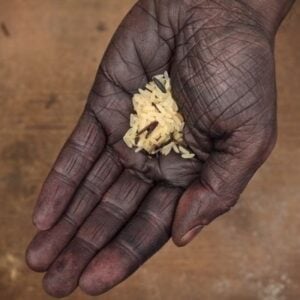
The United Nations has warned that South Sudan is facing a worsening food and nutrition crisis that could escalate further without urgent humanitarian intervention. According to the latest Integrated Food Security Phase Classification (IPC) report, over half of the population—approximately 7.56 million people—are projected to experience crisis or worse levels of hunger during the 2026 lean season between April and July. The report also estimates that more than two million children will suffer from acute malnutrition during this period, underscoring the scale of the crisis.
Food insecurity continues to intensify across the country, with the most severe conditions affecting around 28,000 people in Luakpiny/Nasir and Fangak counties, who are facing Catastrophic (IPC Phase 5) levels of hunger. In southern Luakpiny/Nasir County, the risk of famine looms in a worst-case scenario where conflict and access restrictions persist alongside flooding and disease outbreaks. The crisis is being driven by a combination of escalating conflict, mass displacement, economic instability, climate shocks, and limited humanitarian access—all of which have eroded the coping capacities of vulnerable communities. Meanwhile, some improvements have been recorded in areas where peace has been maintained.
FAO’s Representative in South Sudan, Meshack Malo, highlighted that the hunger crisis stems partly from disrupted agricultural production and damaged agri-food systems that once sustained the country’s food needs. He stressed that achieving lasting peace and revitalizing agriculture are essential to restoring food security and dignity for families. However, humanitarian access remains one of the biggest challenges. Insecurity, looting, poor infrastructure, and severe flooding have left many communities isolated for months, cutting them off from life-saving assistance.
WFP Country Director Mary-Ellen McGroarty described the situation as “an alarming trajectory,” warning that persistent hunger remains a deep concern. She noted that in areas where peace has held and access has been consistent, communities have started to recover, demonstrating that stability and support can drive positive change. However, she emphasized the need to sustain this momentum to achieve long-term progress across all affected regions.
The crisis extends beyond food insecurity, with six counties projected to reach the most critical levels of acute malnutrition in 2026. Conflict-driven displacement, lack of access to essential nutrition and health services, and a growing cholera outbreak have left 2.1 million children under five and 1.1 million mothers at risk of severe malnutrition. UNICEF Representative Noala Skinner expressed grave concern about the high levels of child malnutrition, stressing that children should not bear the consequences of displacement and service disruptions. She called for urgent, safe, and continuous access to health and nutrition services in all affected areas.
Humanitarian agencies warn that the window to act is rapidly closing. Without immediate and sustained support, millions could face deeper deprivation. The UN has called for unimpeded humanitarian access and scaled-up aid delivery to save lives, protect livelihoods, and prevent South Sudan’s crisis from spiraling into an even more devastating humanitarian disaster.