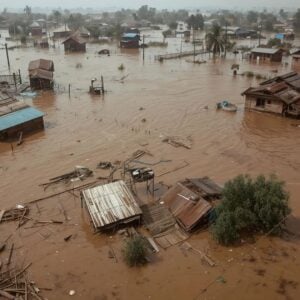
Hurricane Melissa has left a trail of destruction across the Caribbean, bringing torrential rain, storm surges, and landslides that flattened homes, destroyed infrastructure, and left vast areas without electricity, Internet, or communication access. The UN Office for the Coordination of Humanitarian Affairs (OCHA) reported that aid is being mobilized across the region, with emergency response teams assisting governments in Jamaica, Cuba, and Haiti to deliver life-saving support and assess the scale of damage.
In Jamaica, the World Food Programme (WFP) has provided logistics and financial assistance to the Government, delivering 5,000 food kits to feed 15,000 people for a week. WFP Country Director Brian Bogart described the situation in southern Jamaica as “apocalyptic,” with submerged homes, blocked roads, and displaced families sleeping outdoors. While earlier preparedness efforts improved response time, he stressed that Jamaica’s resilience “must now be supported.” The UN has deployed emergency medical teams, bolstered water and sanitation services, and provided psychological care and disease surveillance support. The Pan American Health Organization (PAHO) is sending 5.5 tons of humanitarian supplies, including medical kits, tents, mosquito nets, and water treatment materials.
UNICEF reported that more than 284,000 Jamaican children urgently need assistance in health, education, nutrition, and protection. Olga Isaza, UNICEF’s representative in Jamaica, said that fallen trees and power lines have blocked roads, preventing access to severely affected areas like St. Elizabeth. UNICEF is working with the Government and partners to distribute pre-positioned emergency supplies, including food, clean water, medicines, and hygiene kits, with additional aid ready to be airlifted.
In Cuba, PAHO has dispatched 2.6 tons of humanitarian aid from its Regional Strategic Stockpile in Panama. The shipment contains medical and surgical supplies to support 5,000 people for three months, chlorine tablets to purify millions of litres of water, and shelter materials. UN Spokesperson Stéphane Dujarric reported severe damage across Santiago, Holguín, Granma, and Guantánamo provinces, affecting homes, roads, and health facilities. Hundreds of communities remain isolated due to destroyed transport infrastructure, though once communications are restored, aid deliveries will begin to reach the hardest-hit areas. Dujarric affirmed that the UN and its partners are supporting national authorities in conducting damage assessments and developing early recovery plans to help affected populations rebuild their lives.