• Skip to primary navigation
  • Skip to main content
  • Skip to primary sidebar

fundsforNGOs News

Grants and Resources for Sustainability

  • Subscribe for Free
  • Premium Support
  • Premium Login
  • Premium Sign up
  • Home
  • Funds for NGOs
    • Agriculture, Food and Nutrition
    • Animals and Wildlife
    • Arts and Culture
    • Children
    • Civil Society
    • Community Development
    • COVID
    • Democracy and Good Governance
    • Disability
    • Economic Development
    • Education
    • Employment and Labour
    • Environmental Conservation and Climate Change
    • Family Support
    • Healthcare
    • HIV and AIDS
    • Housing and Shelter
    • Humanitarian Relief
    • Human Rights
    • Human Service
    • Information Technology
    • LGBTQ
    • Livelihood Development
    • Media and Development
    • Narcotics, Drugs and Crime
    • Old Age Care
    • Peace and Conflict Resolution
    • Poverty Alleviation
    • Refugees, Migration and Asylum Seekers
    • Science and Technology
    • Sports and Development
    • Sustainable Development
    • Water, Sanitation and Hygiene (WASH)
    • Women and Gender
  • Funds for Companies
    • Accounts and Finance
    • Agriculture, Food and Nutrition
    • Artificial Intelligence
    • Education
    • Energy
    • Environment and Climate Change
    • Healthcare
    • Innovation
    • Manufacturing
    • Media
    • Research Activities
    • Startups and Early-Stage
    • Sustainable Development
    • Technology
    • Travel and Tourism
    • Women
    • Youth
  • Funds for Individuals
    • All Individuals
    • Artists
    • Disabled Persons
    • LGBTQ Persons
    • PhD Holders
    • Researchers
    • Scientists
    • Students
    • Women
    • Writers
    • Youths
  • Funds in Your Country
    • Funds in Australia
    • Funds in Bangladesh
    • Funds in Belgium
    • Funds in Canada
    • Funds in Switzerland
    • Funds in Cameroon
    • Funds in Germany
    • Funds in the United Kingdom
    • Funds in Ghana
    • Funds in India
    • Funds in Kenya
    • Funds in Lebanon
    • Funds in Malawi
    • Funds in Nigeria
    • Funds in the Netherlands
    • Funds in Tanzania
    • Funds in Uganda
    • Funds in the United States
    • Funds within the United States
      • Funds for US Nonprofits
      • Funds for US Individuals
      • Funds for US Businesses
      • Funds for US Institutions
    • Funds in South Africa
    • Funds in Zambia
    • Funds in Zimbabwe
  • Proposal Writing
    • How to write a Proposal
    • Sample Proposals
      • Agriculture
      • Business & Entrepreneurship
      • Children
      • Climate Change & Diversity
      • Community Development
      • Democracy and Good Governance
      • Disability
      • Disaster & Humanitarian Relief
      • Environment
      • Education
      • Healthcare
      • Housing & Shelter
      • Human Rights
      • Information Technology
      • Livelihood Development
      • Narcotics, Drugs & Crime
      • Nutrition & Food Security
      • Poverty Alleviation
      • Sustainable Develoment
      • Refugee & Asylum Seekers
      • Rural Development
      • Water, Sanitation and Hygiene (WASH)
      • Women and Gender
  • News
    • Q&A
  • Premium
    • Premium Log-in
    • Premium Webinars
    • Premium Support
  • Contact
    • Submit Your Grant
    • About us
    • FAQ
    • NGOs.AI
You are here: Home / cat / Evidence-Based Strategies Unveiled to Combat Global Literacy Challenges Among Children

Evidence-Based Strategies Unveiled to Combat Global Literacy Challenges Among Children

Dated: October 31, 2025

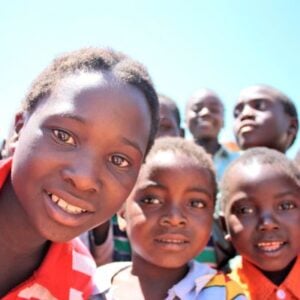
A new global report has shed light on the ongoing literacy crisis affecting millions of children in low- and middle-income countries (LMICs), emphasizing the urgent need for evidence-based teaching methods to improve reading skills. The paper, Effective Reading Instruction in Low- and Middle-Income Countries: What the Evidence Shows, draws on around 120 studies conducted across Africa, Asia, Latin America, and the Middle East, analyzing instruction methods in more than 170 languages. Endorsed by the Global Education Evidence Advisory Panel (GEEAP), which is co-hosted by the UK’s FCDO, UNICEF, and the World Bank, the report identifies key reading skills and highlights the importance of training teachers to teach literacy effectively.

The findings reveal that 70% of children in LMICs cannot read and understand simple, age-appropriate text. Despite years of schooling, many students remain far behind expected proficiency levels. Data from early grade reading assessments across 48 countries show that after three years of education, more than 90% of children still struggle to recognize letters or read basic words. The report stresses that the failure to adopt evidence-based instruction methods is a major factor behind this crisis. It argues that improving teaching practices early can help avoid costly remedial programs, reduce grade repetition, and lower dropout rates later in children’s education.

Experts emphasize the transformative potential of investing in structured, systematic teaching approaches. Benjamin Piper from the Gates Foundation and GEEAP highlighted that the most effective methods teach decoding and language comprehension explicitly and comprehensively. These methods not only improve literacy outcomes but also contribute to developing the human capital needed for sectors like STEM, health, and vocational training. Similarly, Luis Benveniste from the World Bank underlined that literacy underpins lifelong learning, employability, and the ability to adapt to changing job markets.

The report identifies two main skill sets required for reading—decoding and language comprehension. Decoding involves recognizing written symbols and translating them into sounds, while comprehension focuses on understanding meaning. To develop these, children must be explicitly taught several sub-skills, including oral language development, phonological awareness, systematic phonics, reading fluency, comprehension strategies, and writing skills. Evidence shows that targeted instruction in these areas significantly accelerates literacy development, particularly when integrated into structured classroom programs.

UNICEF’s Pia Rebello Britto described the report as a landmark contribution that shifts global dialogue from highlighting the literacy crisis to offering proven solutions. She emphasized that investing in early literacy not only improves educational outcomes but also strengthens future economic and social opportunities for children.

The report concludes with clear recommendations for policymakers, urging national commitments to ensure that every child becomes a skilled reader. It calls for evidence-based, systematic instruction across all key reading skills, appropriate language-of-instruction policies, and effective teacher support through materials and training. Policymakers are encouraged to tailor literacy programs to local contexts while maintaining global best practices. Nathanael Bevan from the FCDO noted that the report provides a practical, adaptable framework for improving reading outcomes, supported by an upcoming “how-to” guide and translations in multiple languages. These resources will be released in November to help countries implement the report’s recommendations globally.


Related Posts

  • Nature Investments Hold the Key to Asia-Pacific’s Economic Future, Says ADB
  • Nature Investments Crucial for Asia-Pacific’s Economic Future, Says ADB Report
  • Southeast Asia: Save the Children Calls for Stronger Action to Protect Environmental Rights of Children
  • Ontario Government Announces $43 Million Investment in After-School Activities
  • Strengthening Immunization in the Eastern Mediterranean: Achievements and Next Steps

Primary Sidebar

Latest News

Sustainable Growth in the Land of a Thousand Hills

EIC Funds €118M for 30 Breakthrough Research Projects

Rethinking Purpose in Later Life for Healthy Longevity

Global Lessons for the Future of Social Care

Private Sector Lessons from FAIR for ALL Programme

Maharashtra Village Restores Mangrove Forests

Rwanda’s Withdrawal from Cabo Delgado: Key Lessons

FAO Warns of Global Food Risks from Strait of Hormuz Disruption

Filipino Food Month 2026 Launched in the Philippines with Culinary Showcases

FAO Promotes Assisted Natural Regeneration in Guinea

Nigeria Boosts Tuberculosis Detection Efforts Nationwide

Safer Food Through Cleaner Markets in Cameroon

Long‑Acting HIV Prevention Introduced in Nigeria to Strengthen Response

Ethiopia Marks World TB Day 2026, Pledges to End Tuberculosis

Seeking Case Studies on Integrated HIV, TB, Hepatitis and STI Care

Asia’s Plastic Waste Solutions Backed by New Investment Fund

Invest in Peace, Invest in Mine Action

Coca-Cola to Invest $1 Billion in South Africa by 2030

IFAD and Bank of Uganda Launch Remittance Dashboard

Mission 300 Forms Council to Expand Electricity Access in Africa

EU Announces Additional €2 Million Aid for Cuba

UNEP FI Makes Climate Data Accessible for Financial Institutions

Türkiye Continues UNDP Partnership on Sustainable Development

GASFP Announces $38 Million Grants for Smallholder Farmers

Vital Support at Risk for Thousands Amid Political Deadlock

£340K Boost for Charities Helping Young People

Continued Adult Social Care Funding for 2026/27

UK Fund Supports Early Drought Response in Guatemala

Burkina Faso: Crimes Against Humanity by All Sides

Haiti Massacre Exposes Failure to Protect Civilians

EIF, Erste Bank Croatia Unlock €58 Million for SMEs

Middle East War Triggers Energy Crisis in Vulnerable Nations

Middle East War: UN’s Türk Decries Free Speech Restrictions

World News Brief: Lebanon, Haiti and Somalia Crises

New Sea Route Brings 106 Tonnes of Aid to Gaza

Women Leaders Unite for Gender Equality and Multilateralism

Canada Increases Federal Support to Address Homelessness

Canada Supports Indigenous Cultures and Languages in Quebec

UK and Madagascar Strengthen Trade Partnership for Growth

Ireland Provides Extra €40M Aid to Support Ukraine

Funds for NGOs
Funds for Companies
Funds for Media
Funds for Individuals
Sample Proposals

Contact us
Submit a Grant
Advertise, Guest Posting & Backlinks
Fight Fraud against NGOs
About us

Terms of Use
Third-Party Links & Ads
Disclaimers
Copyright Policy
General
Privacy Policy

Premium Sign in
Premium Sign up
Premium Customer Support
Premium Terms of Service

©FUNDSFORNGOS LLC.   fundsforngos.org, fundsforngos.ai, and fundsforngospremium.com domains and their subdomains are the property of FUNDSFORNGOS, LLC 1018, 1060 Broadway, Albany, New York, NY 12204, United States.   Unless otherwise specified, this website is not affiliated with the abovementioned organizations. The material provided here is solely for informational purposes and without any warranty. Visitors are advised to use it at their discretion. Read the full disclaimer here. Privacy Policy. Cookie Policy.