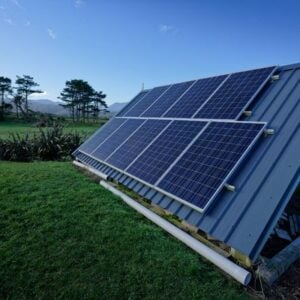
The Asian Development Bank (ADB), in partnership with ACWA Power Company, Sumitomo Corporation, Chubu Electric Power Co. Inc., and Shikoku Electric Power Co. Inc., has signed a major financing agreement to construct two large-scale solar power plants with battery energy storage systems (BESS) in Uzbekistan. Known as the Samarkand 1 and 2 Solar PV and BESS Projects, the facilities will be located in the Samarkand and Bukhara regions, marking a milestone in Central Asia’s renewable energy development.
ADB President Masato Kanda emphasized that the initiative represents one of the most significant renewable energy projects in the region, highlighting its potential to deliver reliable and sustainable energy while reducing emissions. The combined projects will generate 1,000 megawatts of solar power and 1,336 megawatt-hours of energy storage, along with new transmission lines and substations to strengthen Uzbekistan’s grid stability. Once operational, they are expected to power approximately 600,000 households and reduce annual carbon emissions by around 1.3 million tons.
To support the initiative, ADB arranged a $140 million financing package, including $70 million from its own capital resources, $10 million from the ADB-managed Leading Asia’s Private Infrastructure Fund 2 (LEAP 2), and $60 million in syndicated loans. In addition, ADB will provide up to $85 million in credit guarantees to enhance project bankability and mitigate tariff payment risks. These guarantees, backed by the Government of Uzbekistan, helped mobilize over $1.2 billion in total private and partner investments.
ADB is also serving as the environmental and social coordinator for the projects, ensuring compliance with international standards for environmental protection and community engagement. Its financial and risk management support is expected to attract significant climate-aligned investment, making this one of the largest clean energy transactions ever undertaken in Central Asia.
The project has attracted strong international collaboration, with financing partners including the European Bank for Reconstruction and Development, Islamic Development Bank, and Japan Bank for International Cooperation. Commercial banks under Japan’s Nippon Export and Investment Insurance (NEXI) cover—such as Standard Chartered Bank, The Norinchukin Bank, Sumitomo Mitsui Banking Corporation, and KfW IPEX-Bank—are also part of the consortium.
This initiative coincides with the 30th anniversary of ADB’s partnership with Uzbekistan. Since joining ADB in 1995, the country has received loans, grants, and technical assistance totaling $14.6 billion. LEAP 2, managed by ADB and supported by Japan’s JICA with a $1.5 billion commitment, plays a key role in financing sustainable private sector infrastructure projects across developing member countries.
The Asian Development Bank continues to be a leading force in advancing inclusive, sustainable, and resilient development across Asia and the Pacific. Since its founding in 1966, ADB has worked with its 69 member countries to promote innovation, strengthen infrastructure, and accelerate climate action in support of long-term regional prosperity.