• Skip to primary navigation
  • Skip to main content
  • Skip to primary sidebar

fundsforNGOs News

Grants and Resources for Sustainability

  • Subscribe for Free
  • Premium Support
  • Premium Login
  • Premium Sign up
  • Home
  • Funds for NGOs
    • Agriculture, Food and Nutrition
    • Animals and Wildlife
    • Arts and Culture
    • Children
    • Civil Society
    • Community Development
    • COVID
    • Democracy and Good Governance
    • Disability
    • Economic Development
    • Education
    • Employment and Labour
    • Environmental Conservation and Climate Change
    • Family Support
    • Healthcare
    • HIV and AIDS
    • Housing and Shelter
    • Humanitarian Relief
    • Human Rights
    • Human Service
    • Information Technology
    • LGBTQ
    • Livelihood Development
    • Media and Development
    • Narcotics, Drugs and Crime
    • Old Age Care
    • Peace and Conflict Resolution
    • Poverty Alleviation
    • Refugees, Migration and Asylum Seekers
    • Science and Technology
    • Sports and Development
    • Sustainable Development
    • Water, Sanitation and Hygiene (WASH)
    • Women and Gender
  • Funds for Companies
    • Accounts and Finance
    • Agriculture, Food and Nutrition
    • Artificial Intelligence
    • Education
    • Energy
    • Environment and Climate Change
    • Healthcare
    • Innovation
    • Manufacturing
    • Media
    • Research Activities
    • Startups and Early-Stage
    • Sustainable Development
    • Technology
    • Travel and Tourism
    • Women
    • Youth
  • Funds for Individuals
    • All Individuals
    • Artists
    • Disabled Persons
    • LGBTQ Persons
    • PhD Holders
    • Researchers
    • Scientists
    • Students
    • Women
    • Writers
    • Youths
  • Funds in Your Country
    • Funds in Australia
    • Funds in Bangladesh
    • Funds in Belgium
    • Funds in Canada
    • Funds in Switzerland
    • Funds in Cameroon
    • Funds in Germany
    • Funds in the United Kingdom
    • Funds in Ghana
    • Funds in India
    • Funds in Kenya
    • Funds in Lebanon
    • Funds in Malawi
    • Funds in Nigeria
    • Funds in the Netherlands
    • Funds in Tanzania
    • Funds in Uganda
    • Funds in the United States
    • Funds within the United States
      • Funds for US Nonprofits
      • Funds for US Individuals
      • Funds for US Businesses
      • Funds for US Institutions
    • Funds in South Africa
    • Funds in Zambia
    • Funds in Zimbabwe
  • Proposal Writing
    • How to write a Proposal
    • Sample Proposals
      • Agriculture
      • Business & Entrepreneurship
      • Children
      • Climate Change & Diversity
      • Community Development
      • Democracy and Good Governance
      • Disability
      • Disaster & Humanitarian Relief
      • Environment
      • Education
      • Healthcare
      • Housing & Shelter
      • Human Rights
      • Information Technology
      • Livelihood Development
      • Narcotics, Drugs & Crime
      • Nutrition & Food Security
      • Poverty Alleviation
      • Sustainable Develoment
      • Refugee & Asylum Seekers
      • Rural Development
      • Water, Sanitation and Hygiene (WASH)
      • Women and Gender
  • News
    • Q&A
  • Premium
    • Premium Log-in
    • Premium Webinars
    • Premium Support
  • Contact
    • Submit Your Grant
    • About us
    • FAQ
    • NGOs.AI
You are here: Home / cat / AI for Disaster Prevention: Funding Resilience Before Crisis Strikes

AI for Disaster Prevention: Funding Resilience Before Crisis Strikes

Dated: October 14, 2025

In 2024, the World Meteorological Organization (WMO) recorded 617 extreme weather events reported by countries around the world. Of these, 152 were classified as unprecedented and 297 as unusual. According to the WMO’s State of the Global Climate report, these disasters displaced over 824,000 people, injured 1.1 million, and caused 1,700 deaths. Yet, these figures represent only part of the overall toll of the climate crisis. As global climate change accelerates, its financial and developmental impacts deepen—especially in vulnerable regions—making it harder for communities to invest in adaptation and mitigation measures.

Beyond immediate damage, the economic burden of climate change is worsened by financial systems that often overlook the value of ecosystems like forests and wetlands, which provide essential services and act as buffers against natural hazards. A study on European banks revealed that ecosystem degradation and biodiversity loss significantly affect financial stability, highlighting the need to integrate environmental factors into risk assessments. At the 2025 Pan-European Summit on Climate Resilience, experts and policymakers called for urgent, science-based, and equitable strategies that strengthen resilience by engaging local communities and leveraging natural systems.

The International Day for Disaster Risk Reduction emphasizes the theme “Fund Resilience, Not Disasters,” calling for financial systems to better consider the complex links between climate risks, land degradation, and biodiversity loss. Artificial intelligence (AI) is emerging as a key tool in this effort. By processing massive datasets, AI can identify patterns across environmental, social, and economic systems, helping forecast and mitigate risks. Machine learning is already improving heatwave prediction, cyclone forecasting, and agricultural adaptation strategies. Initiatives such as AlphaEarth Foundations use satellite and climate data to map land degradation and soil health, while other studies apply AI to model forest fire risks and promote more resilient ecosystems.

AI’s capacity to analyze interconnected risks can also reshape how climate finance operates. Instead of focusing on short-term disaster relief, AI-driven systems can model complex, multi-hazard events to guide long-term investments in resilience. It can translate climate-biodiversity-land data into measurable financial metrics, helping investors quantify and price risks. For the private sector, AI offers insights to stabilize returns while promoting nature-based solutions. For public institutions, it can identify where funding would best de-risk investments, enabling blended finance strategies that boost both climate and nature resilience.

To fully realize AI’s potential, equitable access to reliable, standardized data and computational infrastructure is essential. Equally important is building trust through transparency. Explainable AI (xAI) ensures that AI systems can justify their predictions, grounding decisions in verifiable data and scientific principles. This transparency is vital when AI informs financial and policy decisions that affect communities and ecosystems.

As the global community marks this year’s International Day for Disaster Risk Reduction, the message is clear: resilience must be prioritized in every funding decision. Integrating AI into long-term climate and financial planning can help shift global systems from reactive to proactive. International collaboration will play a pivotal role, with initiatives such as the Global Initiative on Resilience to Natural Hazards through AI Solutions and its Working Group on AI for Climate Applications leading the way. Co-led by UN agencies including the ITU, UNEP, UNFCCC, UPU, WMO, and UNESCO, this global effort aims to harness AI for climate adaptation, particularly supporting developing and vulnerable nations. Together, these collaborations demonstrate how AI can be a transformative force—funding resilience instead of disasters, and helping humanity navigate toward a safer, more sustainable future.

Related Posts

  • Protecting Communities and Economies with Climate Data and Early Warnings
  • Mauritius Advances Climate-Resilient Health Systems with WHO Support and Institutional Framework Validation
  • Caribbean Schools Embrace Climate-Smart Education Initiatives
  • Global Disasters Displace Millions: IOM Head Calls for Urgent Investment in Resilience
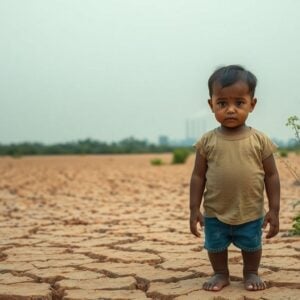
  • Child stands on cracked earth under polluted sky
    A Decade Lost? How Climate Crisis and Slow Growth Threaten Global Poverty Eradication

Primary Sidebar

Latest News

Afghan Education Strengthened Through UNESCO Support to NGOs

FIFA Foundation Steps Up Aid for Hurricane Melissa Victims

£250,000 Grant Opens for Community and Creative Projects in Belfast

What Oregon’s Transport Funding Struggles Teach the Nation

Key Insights from Running AMP & RCPP Agricultural Programs

Inspiring African Youth Success Stories in Governance and Peacebuilding

Andean Agriculture: Slopes That Sustain the World

A Decade of EU Research for Sustainable Agri-Food

Antonio Guterres Raises Alarm Over Global Human Rights Abuses

Moldova’s Green Transition: Why Local Solutions Matter

Ukraine Recovery: $588 Billion Needed Over 10 Years

Updated Report Reveals Ukraine’s $588B Reconstruction Needs

Apply Now: Green Assist Supports Green Investment Initiatives

EU/Israel: Calls Grow for Palestinians’ Rights to Lead Peace Agenda

Finland Grants €20M to Strengthen Humanitarian Response in Ukraine

Advancing Adolescent Health in Central and West Africa

Introducing the GSMA Innovation Fund for Sustainable Mobile Solutions

Leading the Fight Against AMR: Ghana Advances People-Focused Strategies in Africa

WHO Hosts Global Experts in Brazzaville to Boost Filovirus Clinical Care

UN Alerts: 280,000 Displaced Amid Escalating South Sudan Fighting

Ministers Celebrate Key Step Forward for Endangered Bird Conservation

20 Years of the Maritime Labour Convention: Ensuring Workers’ Rights at Sea

Asia Migrant Workers Struggle in Fishing and Seafood Processing

Updated Report: Ukraine’s Recovery and Reconstruction Needs

World Bank Partnership Boosts Job Creation in Papua New Guinea

Congo Basin Countries Chart Carbon Market Strategies

Malawi Economy Outlook: Unlocking Private Sector Growth

Timor-Leste Uses Data-Driven Census to Boost Social Protection and Reduce Child Stunting

SME Success Stories Worldwide: Insights Nepal Can Adopt (II)

Small Grants, Big Lessons: Sustainability in Global Health

Lessons from Three Megadiverse Countries on Biodiversity Protection

RAIN Challenge Insights: Driving Innovation for Climate Resilience

$10 Million Fund to Advance AI Designed By and For People

Albania and UK Exchange Best Practices on Constituency Engagement

Why Strong Education Systems Drive Life Skills Development

Georgia Advances Aquaculture with National Fish Traceability Integration

FAO Assists Tuvalu in Launching First National Crops and Livestock Census

Climate-Smart Equipment Strengthens Dryland Farming and Restores Landscapes

Miombo Woodland Restoration in Zimbabwe Boosted by FAO Training

Deaf Farmers in Egypt Boost Yields Through Adapted Field Schools

Funds for NGOs
Funds for Companies
Funds for Media
Funds for Individuals
Sample Proposals

Contact us
Submit a Grant
Advertise, Guest Posting & Backlinks
Fight Fraud against NGOs
About us

Terms of Use
Third-Party Links & Ads
Disclaimers
Copyright Policy
General
Privacy Policy

Premium Sign in
Premium Sign up
Premium Customer Support
Premium Terms of Service

©FUNDSFORNGOS LLC.   fundsforngos.org, fundsforngos.ai, and fundsforngospremium.com domains and their subdomains are the property of FUNDSFORNGOS, LLC 1018, 1060 Broadway, Albany, New York, NY 12204, United States.   Unless otherwise specified, this website is not affiliated with the abovementioned organizations. The material provided here is solely for informational purposes and without any warranty. Visitors are advised to use it at their discretion. Read the full disclaimer here. Privacy Policy. Cookie Policy.