• Skip to primary navigation
  • Skip to main content
  • Skip to primary sidebar

fundsforNGOs News

Grants and Resources for Sustainability

  • Subscribe for Free
  • Premium Support
  • Premium Login
  • Premium Sign up
  • Home
  • Funds for NGOs
    • Agriculture, Food and Nutrition
    • Animals and Wildlife
    • Arts and Culture
    • Children
    • Civil Society
    • Community Development
    • COVID
    • Democracy and Good Governance
    • Disability
    • Economic Development
    • Education
    • Employment and Labour
    • Environmental Conservation and Climate Change
    • Family Support
    • Healthcare
    • HIV and AIDS
    • Housing and Shelter
    • Humanitarian Relief
    • Human Rights
    • Human Service
    • Information Technology
    • LGBTQ
    • Livelihood Development
    • Media and Development
    • Narcotics, Drugs and Crime
    • Old Age Care
    • Peace and Conflict Resolution
    • Poverty Alleviation
    • Refugees, Migration and Asylum Seekers
    • Science and Technology
    • Sports and Development
    • Sustainable Development
    • Water, Sanitation and Hygiene (WASH)
    • Women and Gender
  • Funds for Companies
    • Accounts and Finance
    • Agriculture, Food and Nutrition
    • Artificial Intelligence
    • Education
    • Energy
    • Environment and Climate Change
    • Healthcare
    • Innovation
    • Manufacturing
    • Media
    • Research Activities
    • Startups and Early-Stage
    • Sustainable Development
    • Technology
    • Travel and Tourism
    • Women
    • Youth
  • Funds for Individuals
    • All Individuals
    • Artists
    • Disabled Persons
    • LGBTQ Persons
    • PhD Holders
    • Researchers
    • Scientists
    • Students
    • Women
    • Writers
    • Youths
  • Funds in Your Country
    • Funds in Australia
    • Funds in Bangladesh
    • Funds in Belgium
    • Funds in Canada
    • Funds in Switzerland
    • Funds in Cameroon
    • Funds in Germany
    • Funds in the United Kingdom
    • Funds in Ghana
    • Funds in India
    • Funds in Kenya
    • Funds in Lebanon
    • Funds in Malawi
    • Funds in Nigeria
    • Funds in the Netherlands
    • Funds in Tanzania
    • Funds in Uganda
    • Funds in the United States
    • Funds within the United States
      • Funds for US Nonprofits
      • Funds for US Individuals
      • Funds for US Businesses
      • Funds for US Institutions
    • Funds in South Africa
    • Funds in Zambia
    • Funds in Zimbabwe
  • Proposal Writing
    • How to write a Proposal
    • Sample Proposals
      • Agriculture
      • Business & Entrepreneurship
      • Children
      • Climate Change & Diversity
      • Community Development
      • Democracy and Good Governance
      • Disability
      • Disaster & Humanitarian Relief
      • Environment
      • Education
      • Healthcare
      • Housing & Shelter
      • Human Rights
      • Information Technology
      • Livelihood Development
      • Narcotics, Drugs & Crime
      • Nutrition & Food Security
      • Poverty Alleviation
      • Sustainable Develoment
      • Refugee & Asylum Seekers
      • Rural Development
      • Water, Sanitation and Hygiene (WASH)
      • Women and Gender
  • News
    • Q&A
  • Premium
    • Premium Log-in
    • Premium Webinars
    • Premium Support
  • Contact
    • Submit Your Grant
    • About us
    • FAQ
    • NGOs.AI
You are here: Home / cat / South Asia’s Economy Remains Robust but Faces Impending Slowdown

South Asia’s Economy Remains Robust but Faces Impending Slowdown

Dated: October 8, 2025

South Asia’s economy is expected to grow strongly at 6.6 percent in 2025, maintaining its position as the world’s fastest-growing region. However, a slowdown is projected ahead, with growth forecast to ease to 5.8 percent in 2026, according to the World Bank’s latest South Asia Development Update: Jobs, AI, and Trade. The report warns that regional growth faces mounting challenges from the global economic slowdown, shifting trade policies, socio-political unrest, and labor market disruptions linked to emerging technologies such as artificial intelligence (AI).

World Bank Vice President for South Asia, Johannes Zutt, emphasized that while the region holds immense economic potential, countries must take proactive steps to address risks and sustain growth momentum. He noted that South Asia can spur private investment, improve productivity, and generate jobs for its expanding labor force by embracing technology, especially AI, and by lowering trade barriers—particularly on intermediate goods critical for manufacturing.

The report highlights that South Asia remains one of the least open regions to international trade and finance. High tariffs continue to protect sectors where job opportunities are shrinking, while simultaneously hampering manufacturing growth by imposing steep tariffs on imported intermediate goods—more than double those found in other emerging markets. In contrast, sectors such as services, where tariffs are lower, have driven nearly three-quarters of employment growth over the past decade. The World Bank suggests that carefully sequenced tariff reductions within broader free trade frameworks could stimulate investment, competitiveness, and job creation.

The rapid rise of AI is reshaping economies globally, and South Asia faces both risks and opportunities in this transition. The region’s workforce, largely employed in low-skill and manual labor, has limited exposure to AI, yet moderately educated youth in business services and IT are increasingly vulnerable to automation. Since the release of ChatGPT, job postings in roles most susceptible to AI replacement have declined by around 20 percent. However, AI also presents opportunities to enhance productivity, with growing demand for AI-related skills and wages for such roles averaging nearly 30 percent higher than other professional positions.

To mitigate risks and harness new opportunities, the World Bank recommends a comprehensive policy approach focused on accelerating job creation and supporting economic transformation. Priorities include reforming size-based regulations that restrict business growth, improving digital and transport infrastructure, facilitating housing mobility, and enhancing skills training and job matching. Safety nets for workers affected by automation and economic shifts are also crucial.

World Bank Chief Economist for South Asia, Franziska Ohnsorge, underscored that greater trade openness and responsible AI adoption could be transformative for the region. She highlighted the importance of policies that allow workers and firms to transition efficiently across sectors and locations, thereby channeling resources toward more productive and resilient parts of the economy. The World Bank also released its country-specific development updates for Bangladesh and Sri Lanka, providing further insights into national economic trends within the region.

Related Posts

  • Unlocking Timor-Leste’s Economic Potential Through Land Reform, Says World Bank
  • MENA, Afghanistan, and Pakistan See Improved Economic Prospects
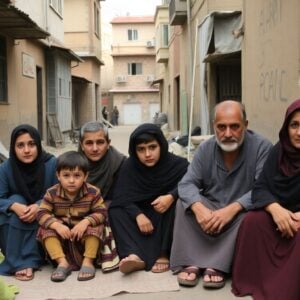
  • Iranian families in a modest urban neighborhood
    Rising Poverty in Iran: Over 80% of Households Now Below Global Benchmark
  • Boosting South American Growth: IDB Group Unveils ‘South Connection’ Project
  • Pakistan Eyes Viet Nam’s $400 Billion Export Model for Economic Growth

Primary Sidebar

Latest News

WHO Warns: Cancer Cases Could Rise 50% by 2040 Without Strong Prevention

What Is Crisis Management in Digital Marketing and Why Does It Matter?

How Digital Marketing Crises Impact Brand Trust: Case Studies and Recovery Lessons

How Sustainable Brands Drive Stronger Consumer Engagement and Loyalty

Digital Marketing for Non-Profits: Strategies to Boost Awareness, & Engagement

Millions Could Die as Global Aid Collapses, New Lancet Research Report Finds

WTO Chairs Programme Receives Funding Boost from Austria

WTO Fish Fund Seeks Proposals to Advance Fisheries Subsidy Agreement Implementation

Journalists Invited to Apply for Media Accreditation for WTO MC14 in Cameroon

WTO 2026 Workshop to Strengthen Government Procurement Policy and Trade Governance

CPI Study Highlights Women-Led Climate Finance in Nepal

Allianz Launches $1 Billion Emerging Markets Climate Fund with Anchor Backing from BII

BII, Alexforbes Drive Renewable Energy Innovation with R1 Billion Revego Investment

Vodacom Foundations Pledge R6 Million for Flood Relief in Mozambique and South Africa

€13B EIB Group Investment Supports France’s Climate Goals

EIB Backs Energy-Efficient Social Infrastructure with €200 Million Loan to Hemsö

€3.5 Billion EIB Financing Positions Greece Among Top EU Beneficiaries in 2025

Why Cities Are Now at the Heart of the Global Water Crisis

IFC Invests $150 Million in Otokoç Otomotiv to Boost Electric Mobility and Jobs in Türkiye

Nigeria Issues ₦501 Billion Power Sector Bond as AFC Supports Landmark Electricity Reforms

African Development Fund Plans Historic $1 Billion Market Borrowing Amid Donor Funding Decline

Somalia on the Brink: Children Face Catastrophic Hunger as Drought, Funding Cuts Deepen Crisis

New $9.3 Million Initiative Strengthens Climate Resilience and Water Security in Kabul

UNDP–ADB Partnership 2026 Boosts Inclusive Recovery in Kyrgyz Republic

Uzbekistan Launches GIS-Based Disaster Risk System

Peace Forest Initiative Pilot Launched in Kyrgyz Republic

Citi Foundation Launches $35M Community Finance Initiative

World Cancer Research Fund on US Dietary Guidelines 2025–2030

Three Key Takeaways from Davos 2026: Climate Resilience, Innovation and Global Partnerships

FAO, UNEP, WHO and WOAH Renew One Health Partnership Through 2030

£3 Million UK Investment to Drive Diet, Health and Sustainable Food Innovation

UK–Japan Partnership Boosts Quantum Technology and Advanced Digital Connectivity

Global Aid Cuts Could Lead to 22.6 Million Deaths by 2030, Study Warns

EBRD Commits Historic €654 Million Investment Across the Baltic States in 2025

How Floating Wetlands Are Transforming Wastewater Treatment Systems

$58 Billion Merger Between Devon and Coterra Creates Major U.S. Shale Player

UN-Led Initiative in Armenia Targets Sustainable Financing for Climate-Smart and Nutrition-Sensitive Agriculture

Irish Ministers to Hold High-Level Talks with EU Budget and Agriculture Commissioners in Dublin

UK–Japan Partnership Expands to Boost Science and Technology Collaboration

AI Growth Zone in Lanarkshire to Generate Over 3,400 Jobs and Support Communities

Funds for NGOs
Funds for Companies
Funds for Media
Funds for Individuals
Sample Proposals

Contact us
Submit a Grant
Advertise, Guest Posting & Backlinks
Fight Fraud against NGOs
About us

Terms of Use
Third-Party Links & Ads
Disclaimers
Copyright Policy
General
Privacy Policy

Premium Sign in
Premium Sign up
Premium Customer Support
Premium Terms of Service

©FUNDSFORNGOS LLC.   fundsforngos.org, fundsforngos.ai, and fundsforngospremium.com domains and their subdomains are the property of FUNDSFORNGOS, LLC 1018, 1060 Broadway, Albany, New York, NY 12204, United States.   Unless otherwise specified, this website is not affiliated with the abovementioned organizations. The material provided here is solely for informational purposes and without any warranty. Visitors are advised to use it at their discretion. Read the full disclaimer here. Privacy Policy. Cookie Policy.